|
Flood update – April 23, 2026
Gatineau, April 23, 2026. – According to yesterday evening's ORRPB forecasts, water levels and flows appear to be stabilizing in several parts of Gatineau. Shoreline property owners may notice a temporary drop in levels in places. However, the risk of another rise at the end of April or in early May remains high because of the significant snow cover in the northern part of the basin and because of imprecise longer term rain forecasts. As a result, it is important that shoreline property owners remain vigilant and keep their dykes in place. Again according to the ORRPB, given the moderate temperatures forecast and the absence of significant precipitation expected over the coming days, spring runoff from the central unregulated portion of the basin is expected to gradually decrease over the coming week. The speed with which water levels and flows will fall over the coming weeks will depend on weather conditions. Progressive reopening of certain roads | ● | Given the slight drop in levels observed on certain roads, municipal crews are planning on reopening some areas to local traffic only. They will work as quickly as possible to allow limited access to those roads without compromising safety. |
| ● | Shoreline roads are subject to increased risk because of the:
– risk of erosion;
– presence of waves;
– possibility of damage to infrastructures, including culverts;
– possibility of road subsidence; and
– loss of the soil's holding capacity due to water saturation of the road.
|
| ● | The integrity of the road, including its non-visible components, has to be checked prior to any reopening. |
| ● | The public is asked not to drive on closed roads until they have been officially reopened. They should continue to be considered a stricken zone, and vigilance is essential to ensure everyone's safety. |
| ● | Thus, people are asked to follow the situation in real time at gatineau.ca/flood because some roads may be reopened and then closed again as the situation changes. |
| ● | Before reopening a road, Gatineau must:
– inspect the condition of the pavement, including for erosion and the integrity of the infrastructures;
– test for weight bearing capacity; and
– clear away debris.
|
| ● | These steps take time, particularly because crews must often wait until all of the water has run off the pavement. |
| ● | Roads can only be reopened progressively further to inspection results. In the event of anomalies, it may take several weeks to fully reopen a road, particularly when it runs along a shoreline. Residents are asked to cooperate and be patient. |
Access on foot | ● | People must be prudent when walking along flooded roads, sidewalks and pathways:
– inasmuch as possible, avoid flooded areas even if the water appears to be shallow (unstable ground, cavities, hidden hazardous objects, currents); and
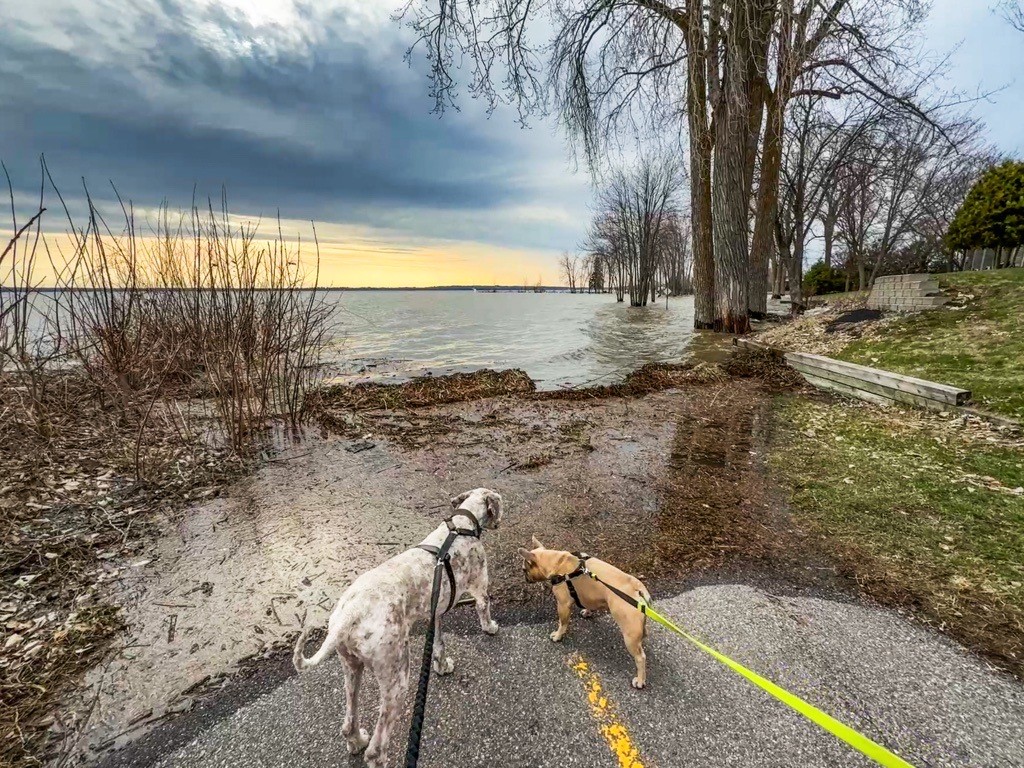
– comply with signage and barricades.
|
| ● | Plan routes and stick to safe areas by consulting the interactive map: gatineau.ca/flood. |
Watch out for waves | ● | Avoid and adapt when driving through flooded areas. It is essential to keep speeds at a minimum when driving through flooded areas. |
| ● | Fast-moving or too many cars may create waves that will aggravate the damage to affected properties. |
| ● | The Service de police (SPVG) and the Service de sécurité incendie (SSIG) are present in and around flooded sectors to ensure the public is aware of the impact of waves. |
| ● | Again, please remember that automobiles and motorized vehicles may damage affected properties. |
Flood victims relief centre | ● | Starting tomorrow (April 24, 2026), the centre will be open to flood victims from 9 a.m. to 7 p.m. |
| ● | Showers will be available during 8:30 am and 8 pm at the following locations:
– Centre aquatique Lucien-Houle;
– Centre aquatique Paul-Pelletier; and
– Centre sportif de Gatineau.
|
| ● | People are asked to keep in touch with family, friends and neighbours affected by the flooding. |
Images
|